
Best Red Light Therapy Masks for Acne & Anti-Aging 2026
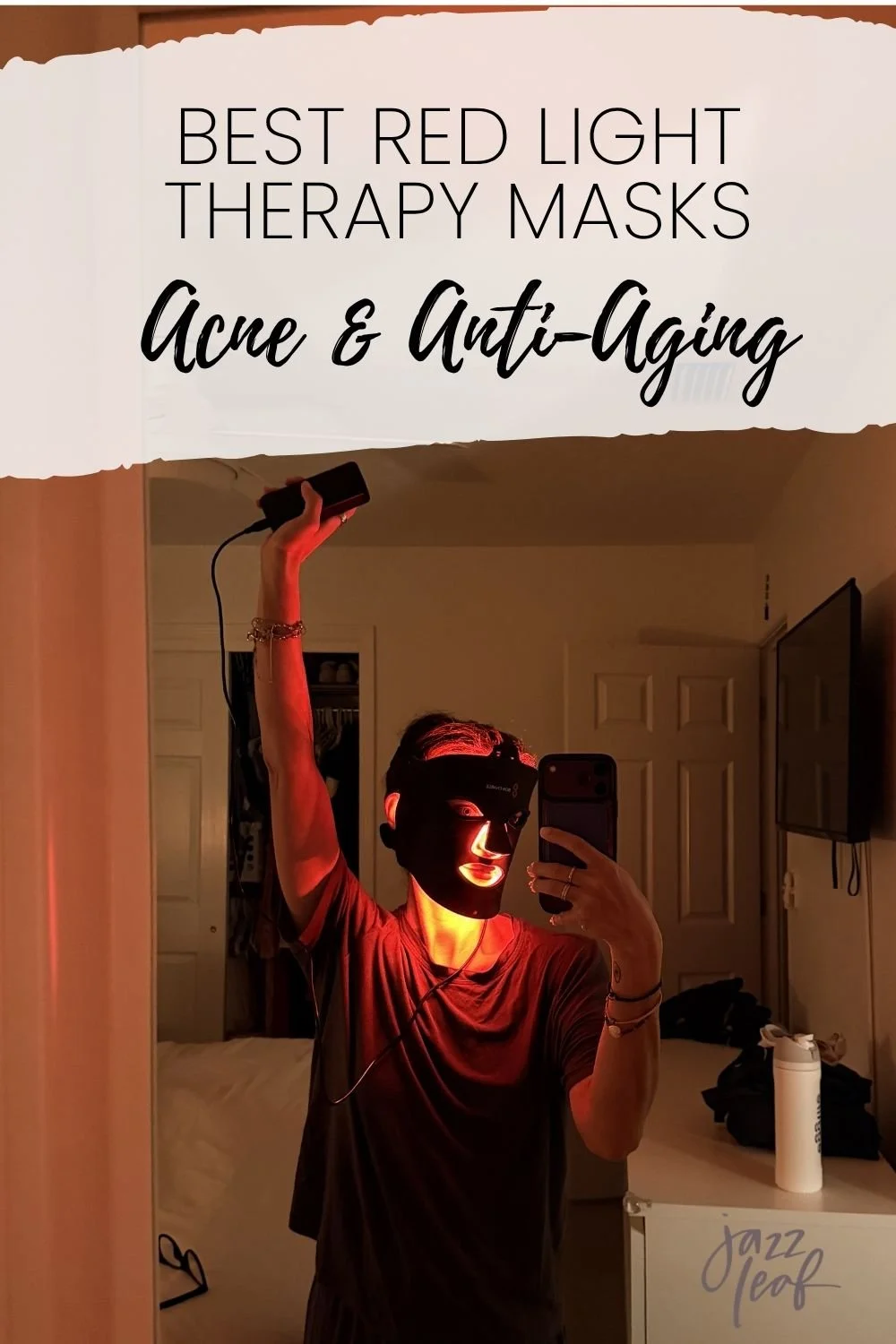
Okay, so you have probably seen the glowing alien face masks all over your Instagram feed and thought: is this real, or is this just what expensive skincare looks like now?
I had the exact same reaction. And then I bought one. And then I bought another one. So here we are.
I am a nutritional therapy practitioner and former private chef, and my whole approach to health has always started with one belief: food is medicine. I look for solutions that work with your body, not against it. I want things that are as close to natural as possible. So when I started learning about red light face therapy, and realized it is literally harnessing specific wavelengths that exist in natural sunlight, just without the UV damage, I was immediately curious.
This is not some synthetic chemical we are putting on our skin. This is light. The kind your cells were literally designed to absorb.
But I also want to be honest with you because that is kind of the whole point of this space.
You might also like: Cute and Affordable Workout Clothes for Women, and Best Wellness and Kitchen Gift Ideas (Plus Gifts Under $50!)
Note: This post may contain affiliate links, meaning I get a commission if you decide to make a purchase through my links, at no cost to you.
My Skin Story
I did not wake up with great skin.
I had acne as a teenager, and honestly, I wish these devices existed back then. I truly think it would have changed things for my confidence in a way that I cannot fully explain as an adult looking back.
Then I got off birth control about six years ago and my skin did what skin does when hormones shift. It broke out. And not just a few pimples. We are talking hormonal acne that would scar if I even looked at it wrong. Redness that never fully went away. Dark spots and pigmentation that would stick around for months after a breakout. That combination of active acne plus the aftermath of acne is its own specific kind of exhausting, and if you are in that boat right now, I see you completely.
I tried everything. Tretinoin. Retinols. Harsh creams that the internet told me would fix everything. What they actually did was destroy my skin barrier. My face was dry, red, peeling, and still breaking out. I was spending close to one hundred dollars a session at the facialist just to get LED light therapy to calm my skin down, and the results lasted maybe two weeks before I was back to square one.
That is when I started researching at-home red light therapy masks seriously. Not as a trend. As a solution.
So What Actually Is Red Light Face Therapy?
It sounds more complicated than it is. Red light therapy is the use of specific wavelengths of light to trigger your skin cells to do their jobs better. Your cells already know how to repair themselves, produce collagen, and fight inflammation. Red light just gives them more energy to do it.
Here is the quick science without the boring part. Your mitochondria, the little powerhouses inside your cells, can absorb certain wavelengths of light. When they do, they produce more ATP, which is basically cellular energy. More energy means your skin cells can work harder on repair, collagen production, and healing. Think of it like charging a battery that was running low.
The wavelengths that matter most are 630 to 660nm for red light, which works at the skin surface layer, and 800 to 850nm for near-infrared light, which goes deeper into tissue. Most quality masks use both.
And here is the thing I love about this from a holistic standpoint. These wavelengths exist in natural sunlight. Your body was literally designed to respond to them. Red light therapy just delivers them in a concentrated, controlled way without the UV damage that comes with actual sun exposure. You are not putting anything on your skin. You are not disrupting your hormones. You are using light, the same light your cells have been responding to for your entire life.
What Red Light Therapy Actually Does for Your Skin
For Acne and Active Breakouts
This is the one I care about most personally, so let me start here.
Most red light masks also include blue light at around 415 to 460nm. Blue light targets acne-causing bacteria directly at the skin surface. Red light works on the inflammation underneath. When you use them together, you are hitting the problem from two completely different angles at the same time, which is why this combination outperforms blue light therapy alone.
For me specifically, I use blue light when I feel a breakout coming or when my skin is congested. I use red light as my nightly maintenance. I am not perfect at not touching my face, but I am much better than I used to be, and having a consistent nightly tool has genuinely changed my relationship with my skin.
For Redness and Pigmentation
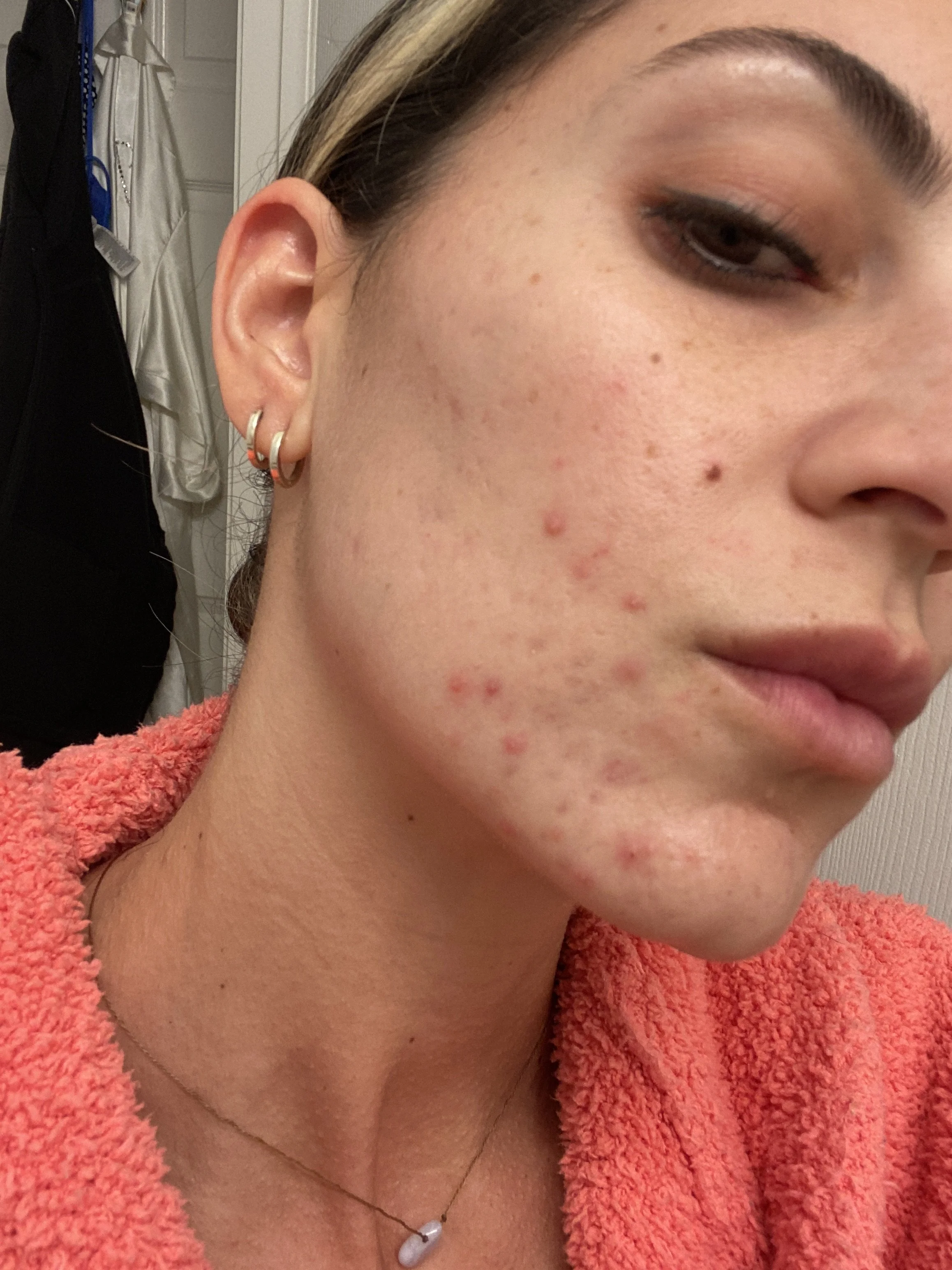
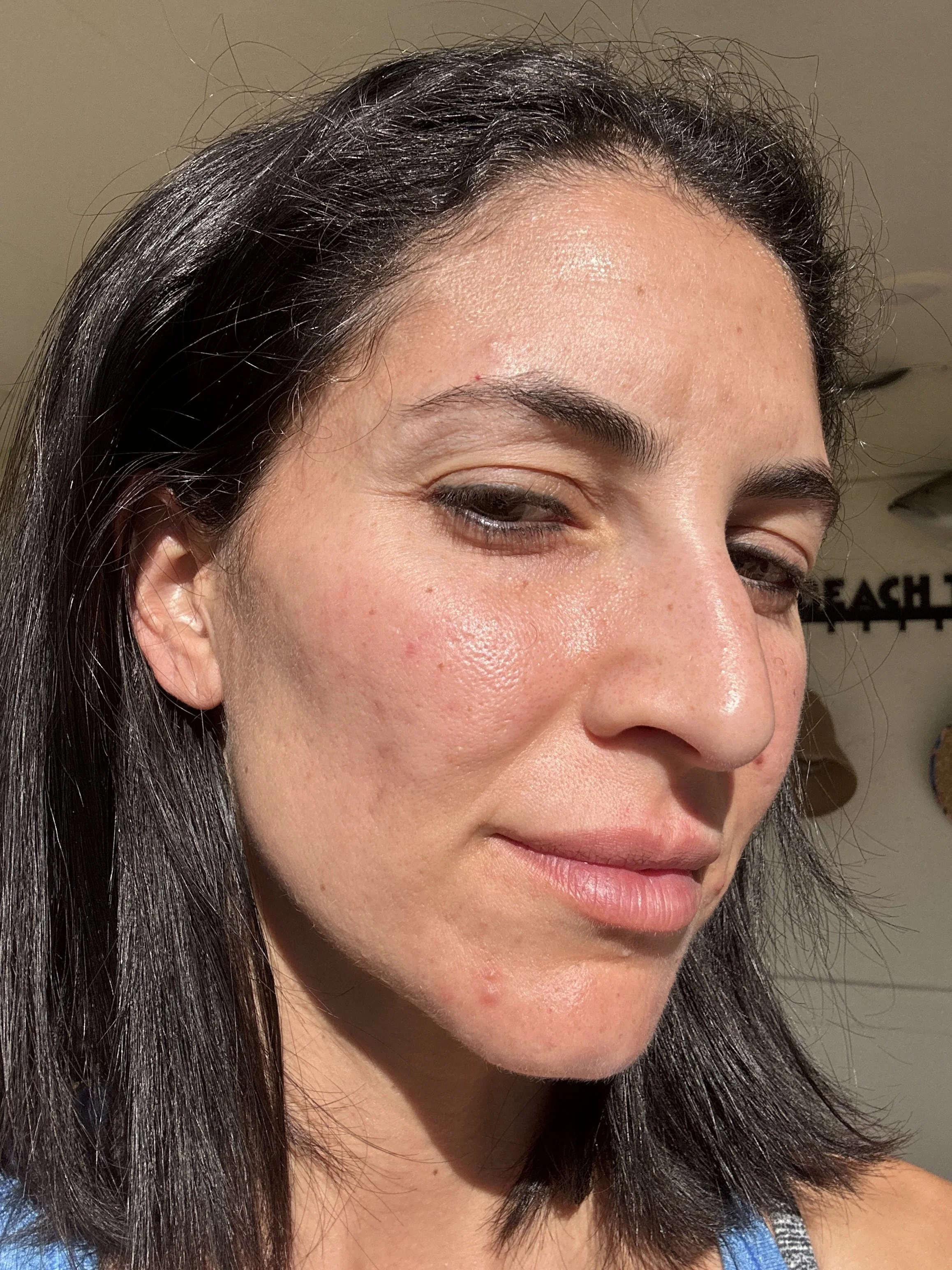
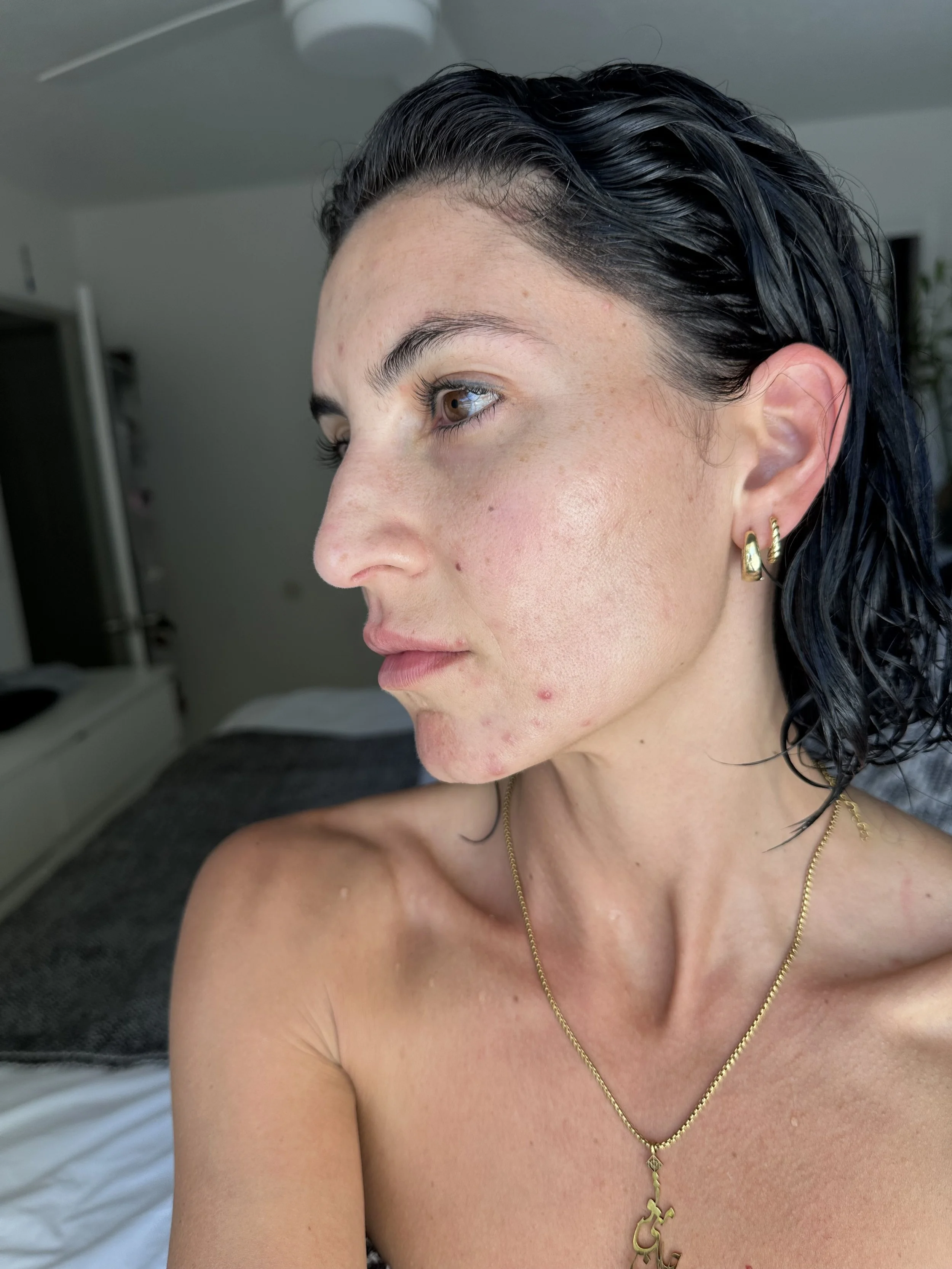
This was honestly the biggest surprise for me. The red spots and pigmentation I had been carrying around for years from old acne scars started fading within about four weeks of consistent use. I have before and after photos below that show this more clearly than any words I could write. Improved blood flow from the near-infrared wavelength means more oxygen and nutrients reaching the skin, and that combination accelerates the fading process for residual pigmentation.
Skin Progression

For Fine Lines and Collagen Production
Red light stimulates your fibroblast cells, which are the cells responsible for the production of collagen and elastin. Collagen is what keeps skin firm, plump, and elastic. We lose it as we age, and the research on red light therapy for collagen production is actually some of the most solid in the space. Multiple clinical trials using 630nm LED masks over several months have shown measurable improvements in skin firmness, wrinkle depth, pore size, and skin density.
What I noticed personally was that my overall skin texture changed before anything else. It just started looking smoother. More even. Like my foundation sat differently. That happened around week four and just continued from there.
For Overall Skin Health
Clinical research shows more than ninety percent of participants reported improvement in skin tone, overall skin texture, and smoothness after consistent use. Red light also reduces inflammation at a cellular level, which matters for anyone with redness-prone or reactive skin. It supports tissue repair and wound healing, which for acne-prone skin means faster recovery from breakouts and less chance of scarring.
That is the part I think matters most. This is not just about younger-looking skin. It is about helping your skin function better.
How I Fit This Into My Nighttime Routine
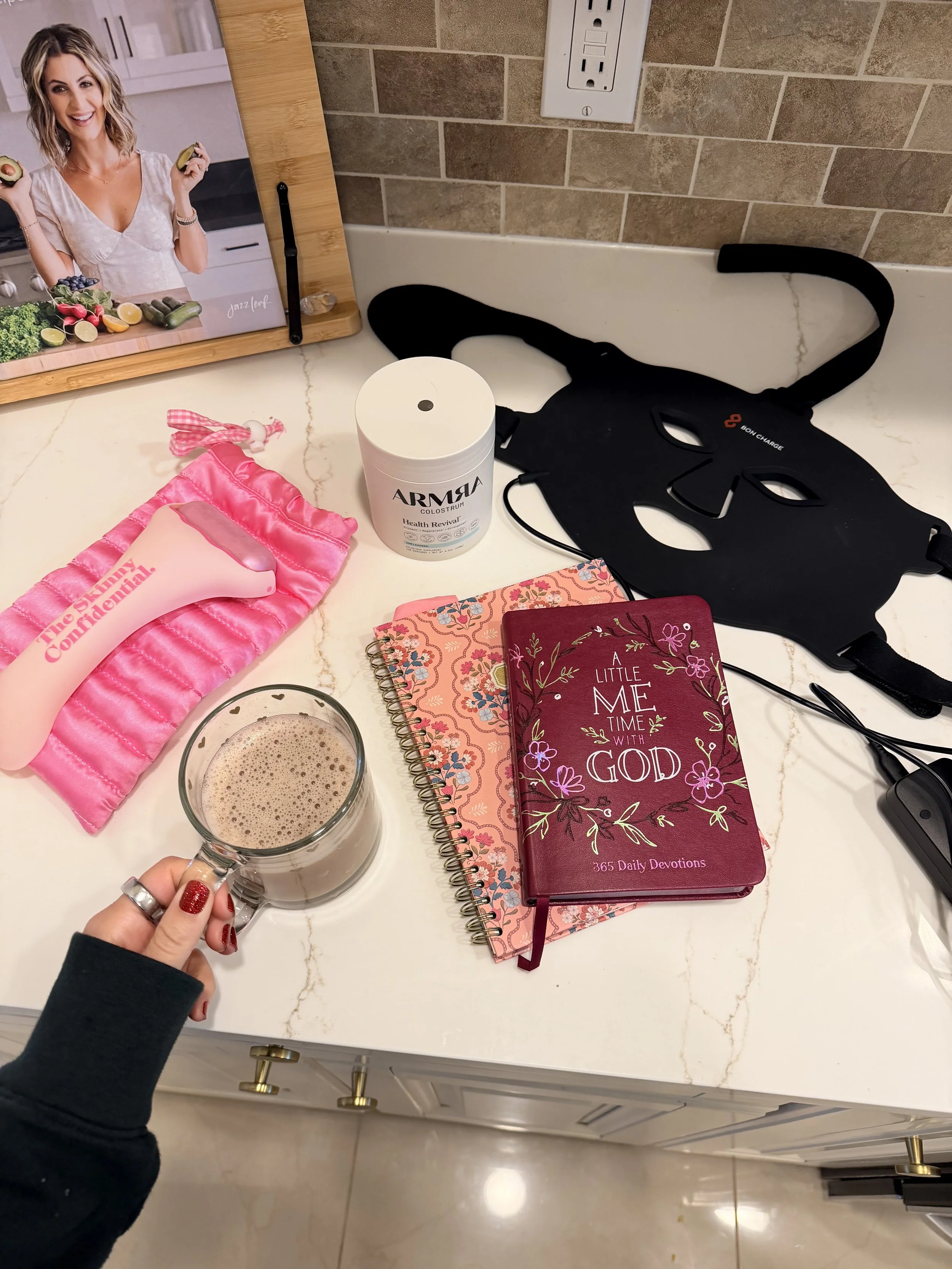
Here is the thing about adding anything new to your routine. If it is not easy, it is not going to stick.
I am a mom. My nights are not long luxurious self-care rituals. They are the ten to fifteen minutes I carve out between getting my toddler to sleep and crashing myself.
This is what my actual routine looks like. I double cleanse with the ClearStem GentleClean cleanser:
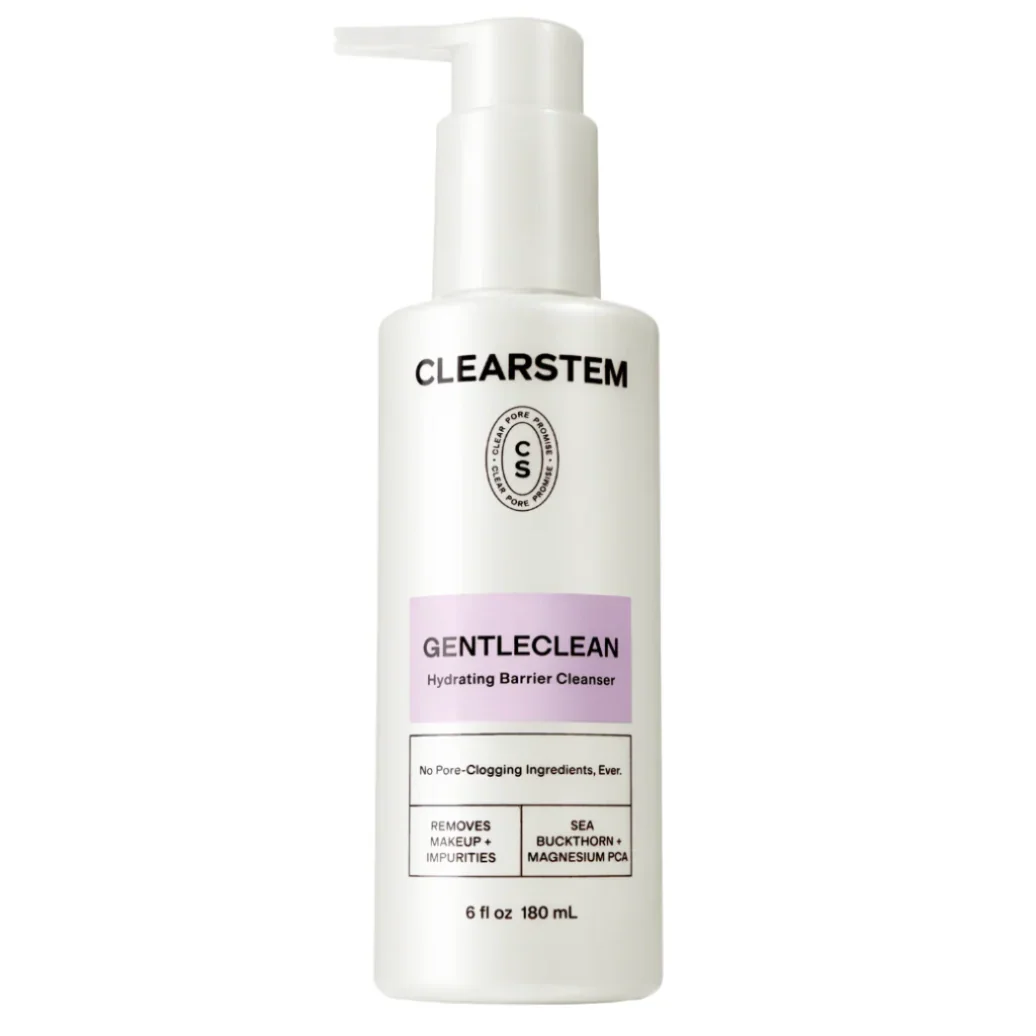
Code: Jazzleaf for discount
It is specifically formulated for acne-prone skin with zero pore-clogging ingredients. I have been using this cleanser since I ditched all of my harsh actives and it is genuinely the most important non-negotiable in my routine because what you cleanse with sets the foundation for everything else.
Then I put on the red-light device for ten minutes. That is it. While the mask is on I am picking up my room, getting my clothes out for the next day, doing all the little things that need to happen before I can actually sit down. I am not strapped to a chair staring at a wall. The mask is wireless, hands-free, and I can move around.
After the session I go straight in with my moisturizer on clean skin. The light actually helps with product absorption, so I like applying my moisturizer immediately after. I do this five to six nights a week, and I have done it consistently for six months as I write this.
ClearSteam HYDRAGLOW Moisturizer:
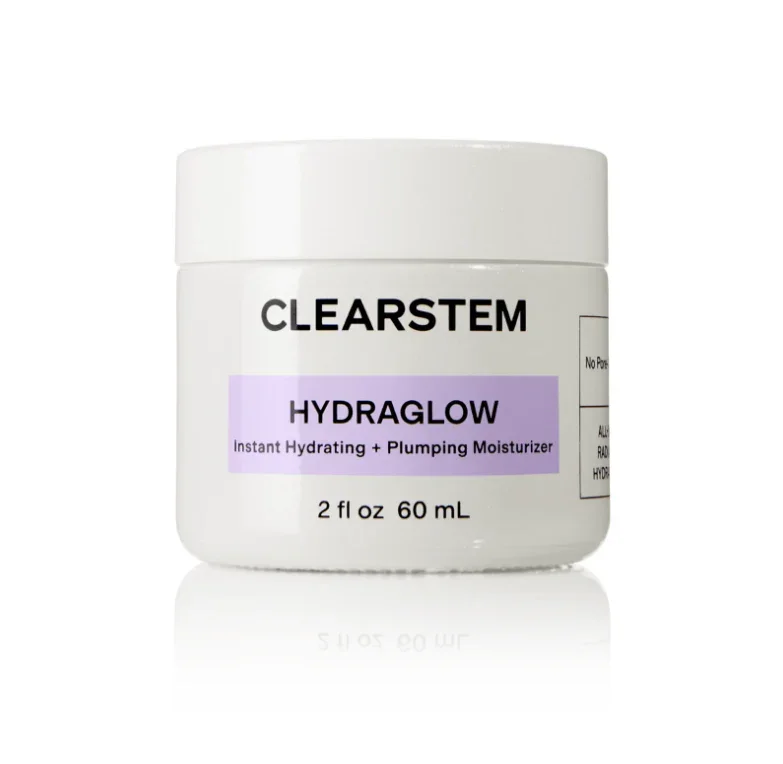
Code: JAZZLEAF for discount
Some people feel a little energized after their session, especially if they are using near-infrared, which is why you might see people using their mask in the morning while they get ready for the day. That works really well too. For me it has become a wind-down ritual, but morning use is a completely valid approach if you prefer it.
If you want my full acne-safe skincare routine, I have it all linked on my ShopMy page here.
What to Actually Look for in a Red Light Therapy Mask
Before we get into the specific masks I have tried and recommend, here is your cheat sheet for evaluating any red light therapy device. These are the specs that actually matter and that most brands either bury or leave out entirely.
Wavelength
This is the most important number on the page. You want 630 to 660nm for red light and 850nm for near-infrared. If a brand does not disclose specific wavelengths, do not buy it. Full stop.
Irradiance
This is how much light energy actually reaches your skin and is usually listed in mW/cm2. Clinical research supports 35 to 50 mW/cm2 as the effective range. Below 30 and the light is not strong enough to trigger a cellular response. Too high and it converts to heat rather than therapy. Most brands do not advertise this clearly, which tells you something.
LED Count and Coverage
More LEDs means more even distribution across your face. Masks with fewer than 100 LEDs leave gaps. Look for full face coverage including the nose bridge, forehead, and chin. A higher LED count is not everything, but it is a useful signal.
FDA Clearance
Look specifically for 510(k) clearance. FDA-registered is a lower bar that mostly just means the company filed paperwork. FDA-cleared means the device was actually evaluated for safety and effectiveness. That distinction matters.
Session Time
Clinical trials that produced the best results used 10 to 20 minute sessions. Any mask claiming faster results in three minutes or less from a single wavelength should be approached skeptically. Consistency matters more than marketing claims.
The Masks I Have Actually Tried and the Ones I Recommend
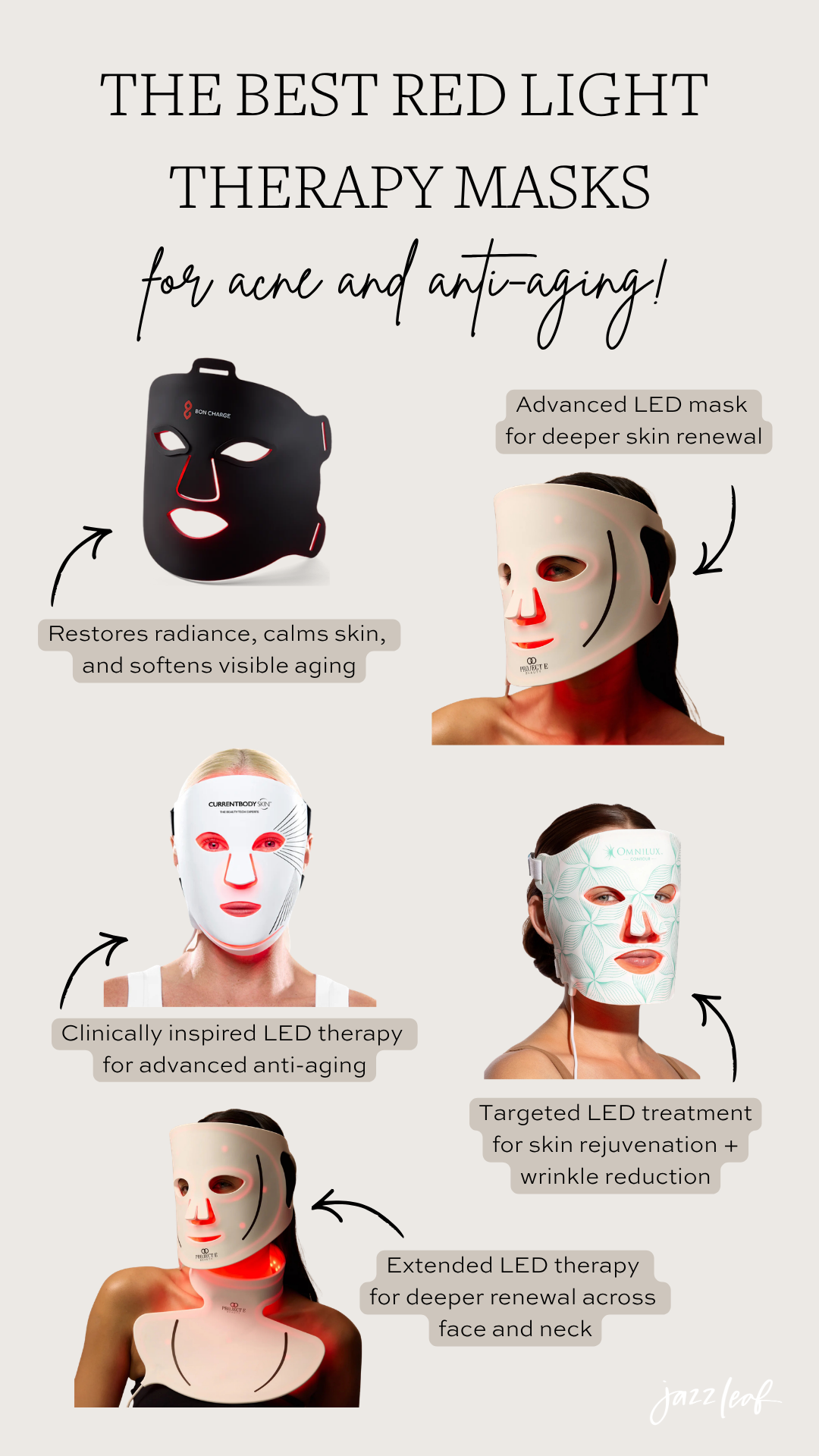
BON CHARGE Red Light Face Mask
My first mask. The one that started everything.
I had zero expectations when I ordered this. I genuinely thought it was going to be one of those things I used twice and then shoved in a drawer. Instead I was using it every single night before I even noticed I had built a habit. Ten minutes on clean skin, near-infrared on, done. And the results were not subtle. My skin texture changed noticeably, and the red spots I had been carrying around forever started fading. Within four weeks I could see a real difference. Six months in, the change is significant enough that I talk about it constantly. I have the before and afters to show you.
So why does this one work? Let me break it down without making it a science lecture.
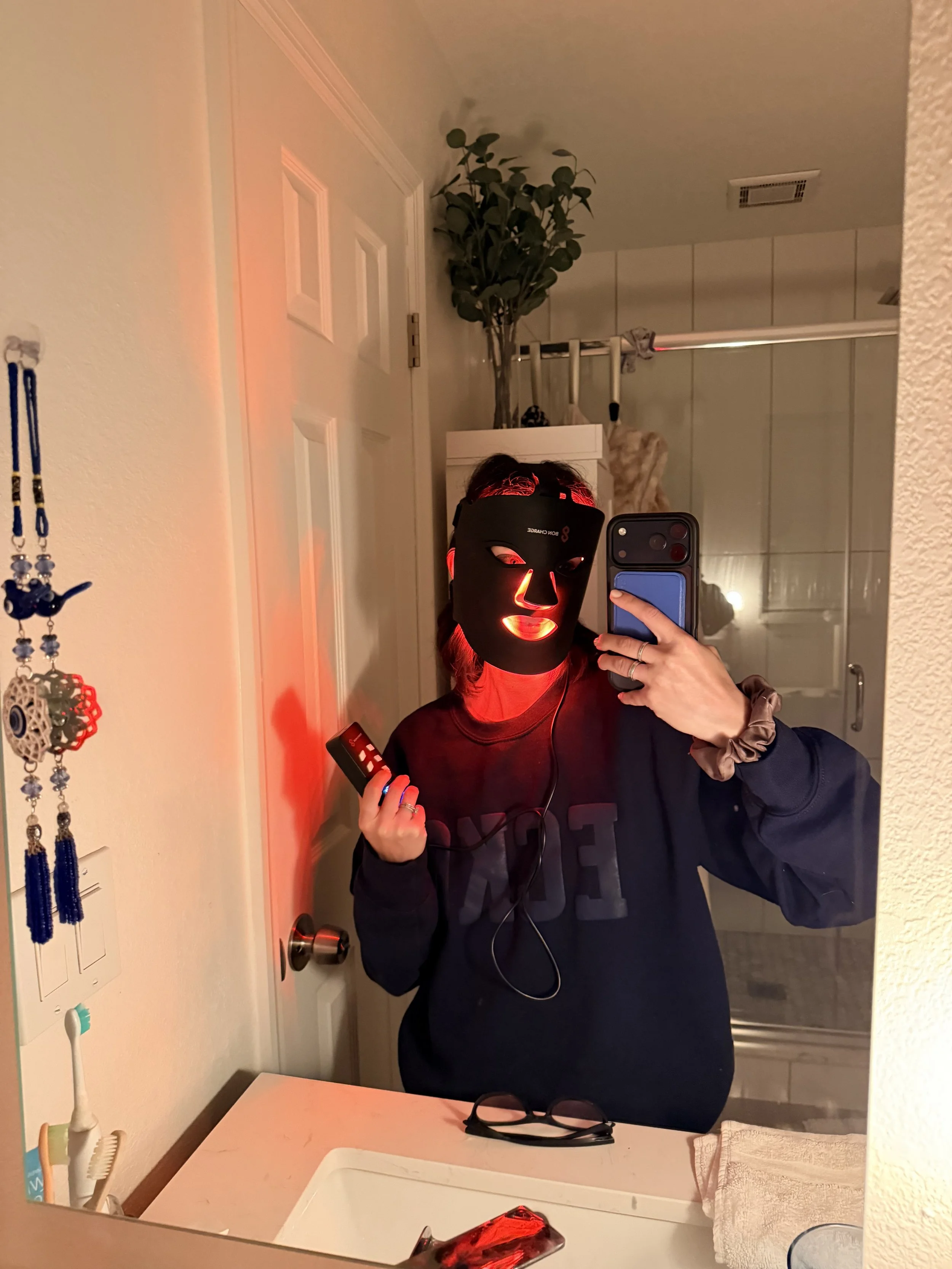
This mask uses 630nm red light and 850nm near-infrared. The 630nm is your collagen-stimulating, inflammation-calming, surface-level wavelength. The 850nm goes deeper into your tissue where cellular regeneration and healing happen. That combination is why you feel a subtle warmth during your session and why the results extend beyond just surface-level texture.
The irradiance sits at 40.8 mW/cm2, which puts it squarely in the effective range research identifies as the sweet spot. Too low and nothing happens. Too high and you are generating heat instead of therapy. BON CHARGE lands right in the middle. The mask also has 240 medical-grade LEDs, which is nearly double what a lot of competitors carry, so coverage is even across your entire face including the spots where cheaper masks leave gaps.
The controls are intuitive, the battery lasts through about twelve sessions on a full charge, and you can adjust intensity and session time. It is the most beginner-friendly mask on this list and it genuinely delivers results.
Who this is for: anyone starting out with red light therapy, anyone dealing with skin texture, redness, or post-acne pigmentation, and anyone who wants a daily-use mask with a straightforward protocol.
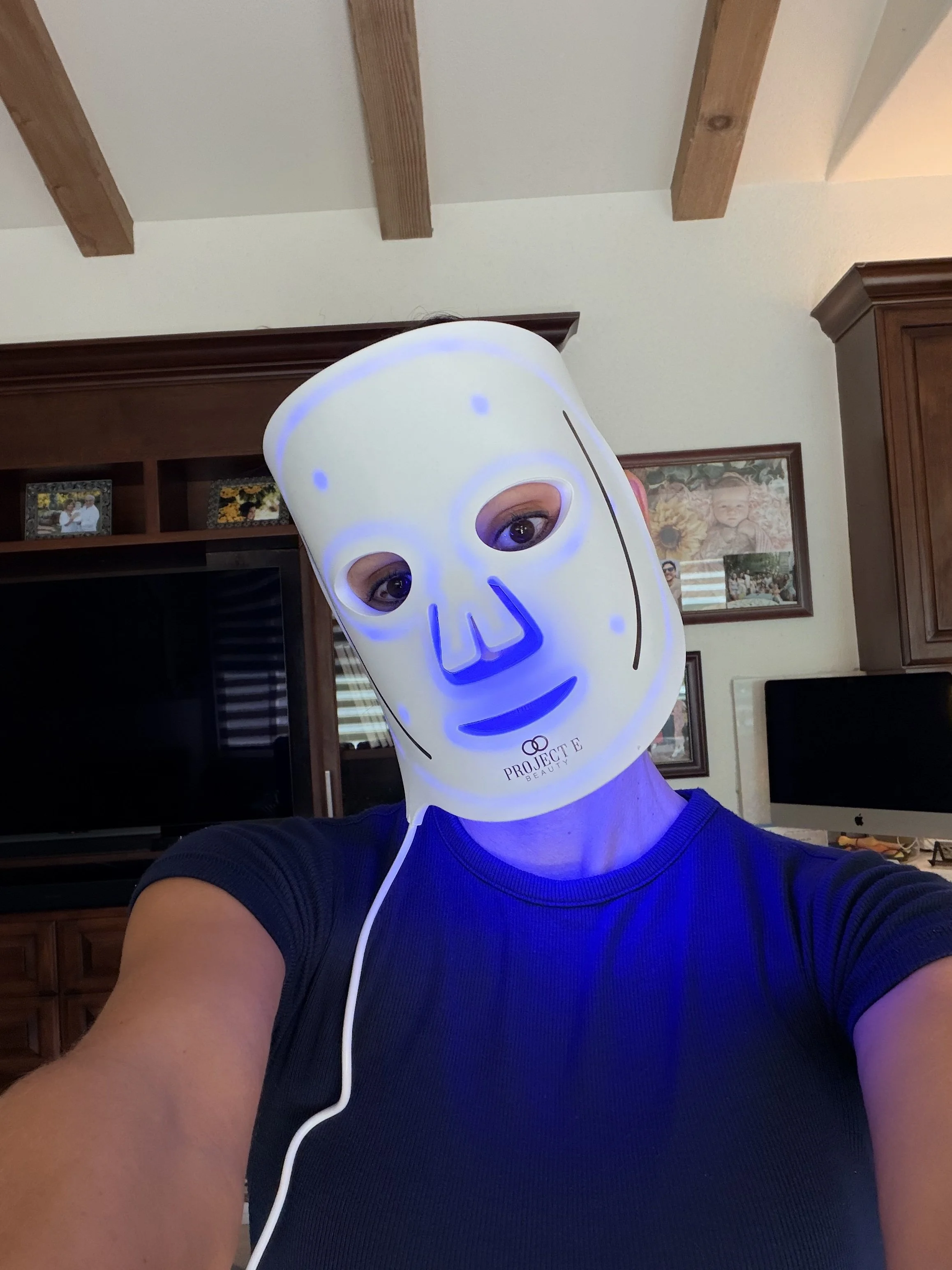
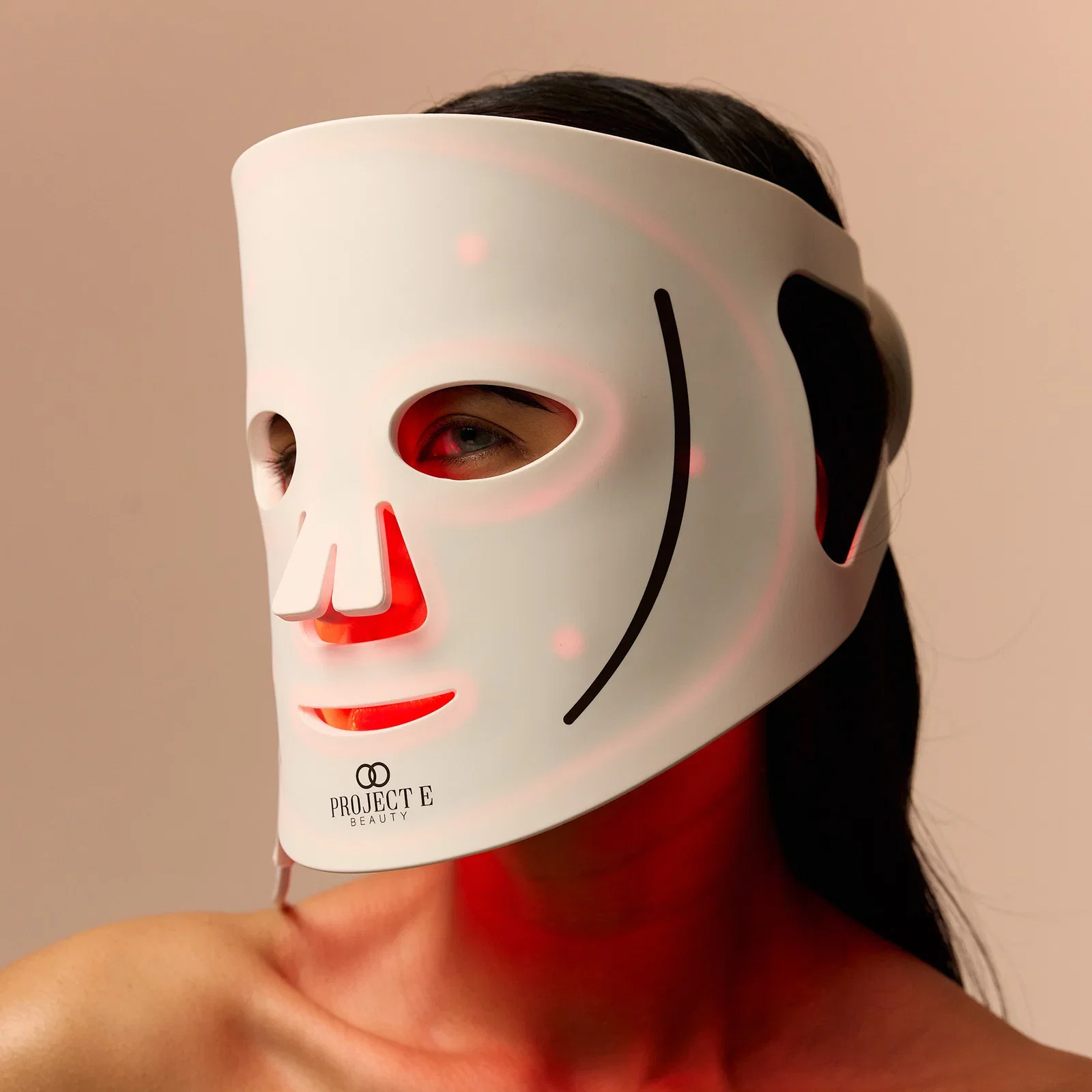
Project E Beauty LED Mask + Neck Piece
My mom discovered this one. Then I kept stealing it.
My mom found this one and I cannot tell you how many times I borrowed it before she even noticed it was missing. The reason I kept going back was the neck piece, and I know that sounds like a weird thing to be obsessed with but hear me out.
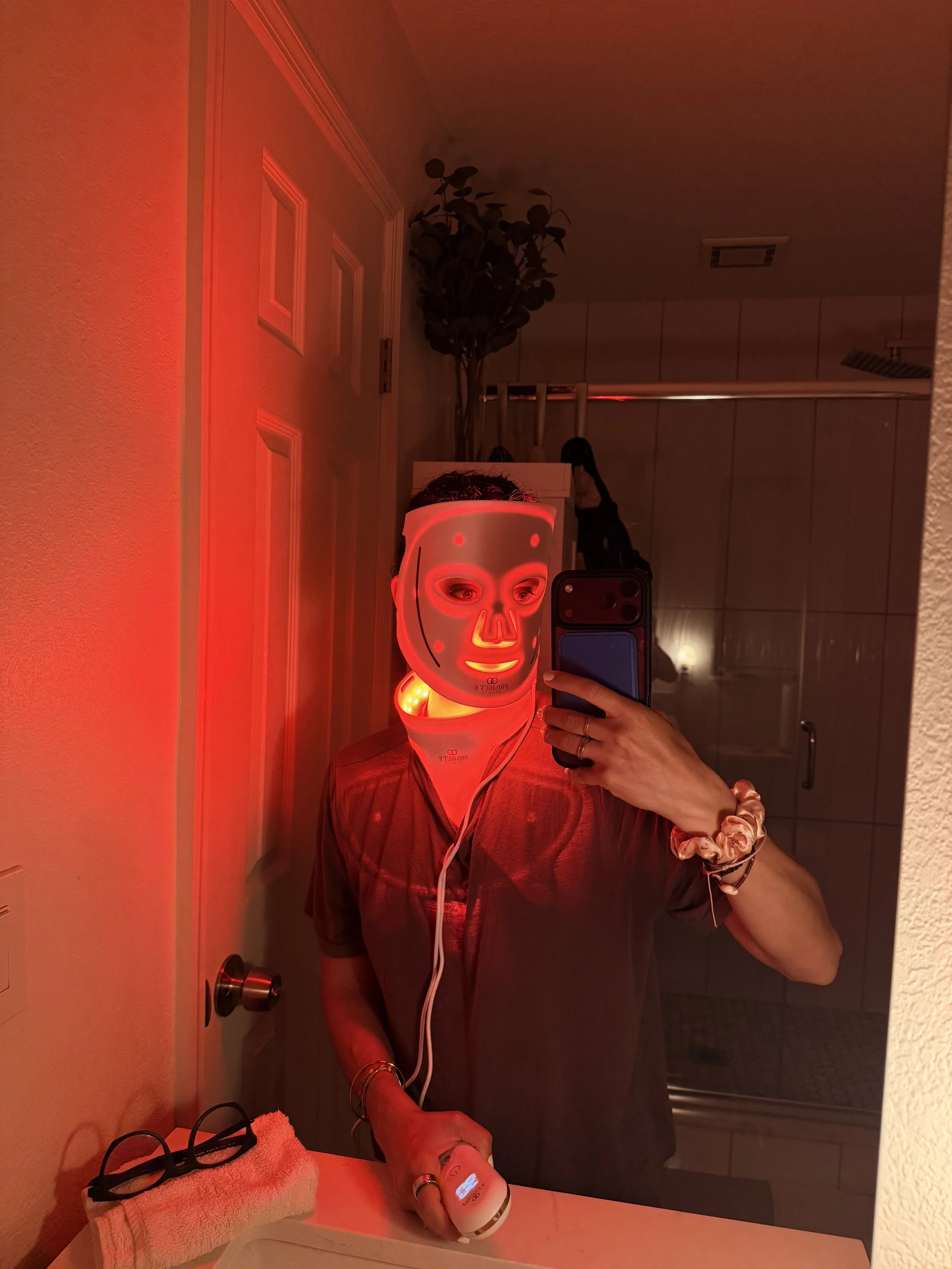
Your neck is one of the first body parts where aging shows up and most of us are layering serums on our faces while completely ignoring everything below the chin. The neck piece that comes with this mask means you are treating that area at the same time with zero extra effort. Because near-infrared reaches into tissue and not just skin, I have also been using it on the back of my neck when I am tense and on my knee when it gives me trouble. Is that the intended use? Not exclusively. Does it work for pain relief in those small areas? In my experience, yes.
If you don’t have time, a huge plus is that the effectivness of this product is based on only 3 minutes of use. Great if you always feel like you are low on time!
Now the color modes. This mask gives you several light-emitting diode wavelengths and each one has a specific job. I mainly rotate between two. Red at 630nm for collagen, texture, and anti-aging. Blue at 460nm for acne. Blue light therapy targets acne-causing bacteria at the surface level, which is a completely different mechanism than what red light treatment does. Red light calms the inflammation. Blue light kills the bacteria causing the problem in the first place. When you use them together you are hitting it from both sides at once, which is something a single-wavelength mask cannot do.
When I feel a breakout coming I switch to blue. When I am in maintenance mode I stay on red. The fact that I can target both concerns with the same red-light device in the same session is genuinely one of the most practical things about it, especially for anyone like me whose skin is dealing with both hormonal acne and the signs of aging at the same time.
Who this is for: anyone dealing with both acne and aging, anyone who wants a neck treatment built into their routine, and anyone who wants multi-concern coverage without buying separate at-home devices.
Use Code: Jazz = 15% off
Omnilux Contour Face
My esthetician’s top pick. She does not waste her professional credibility on things that do not work.
You can shop it here:
I want to be clear here. I do not personally own this one. This is not me pretending I have tested every device on the market. This one was specifically recommended by my esthetician, and that matters to me because when she recommends something, I write it down immediately.
She has been in skin care for years and has seen every trendy device come and go without blinking. When I asked what mask she would recommend if she were building an at-home routine from scratch, she said Omnilux without pausing.
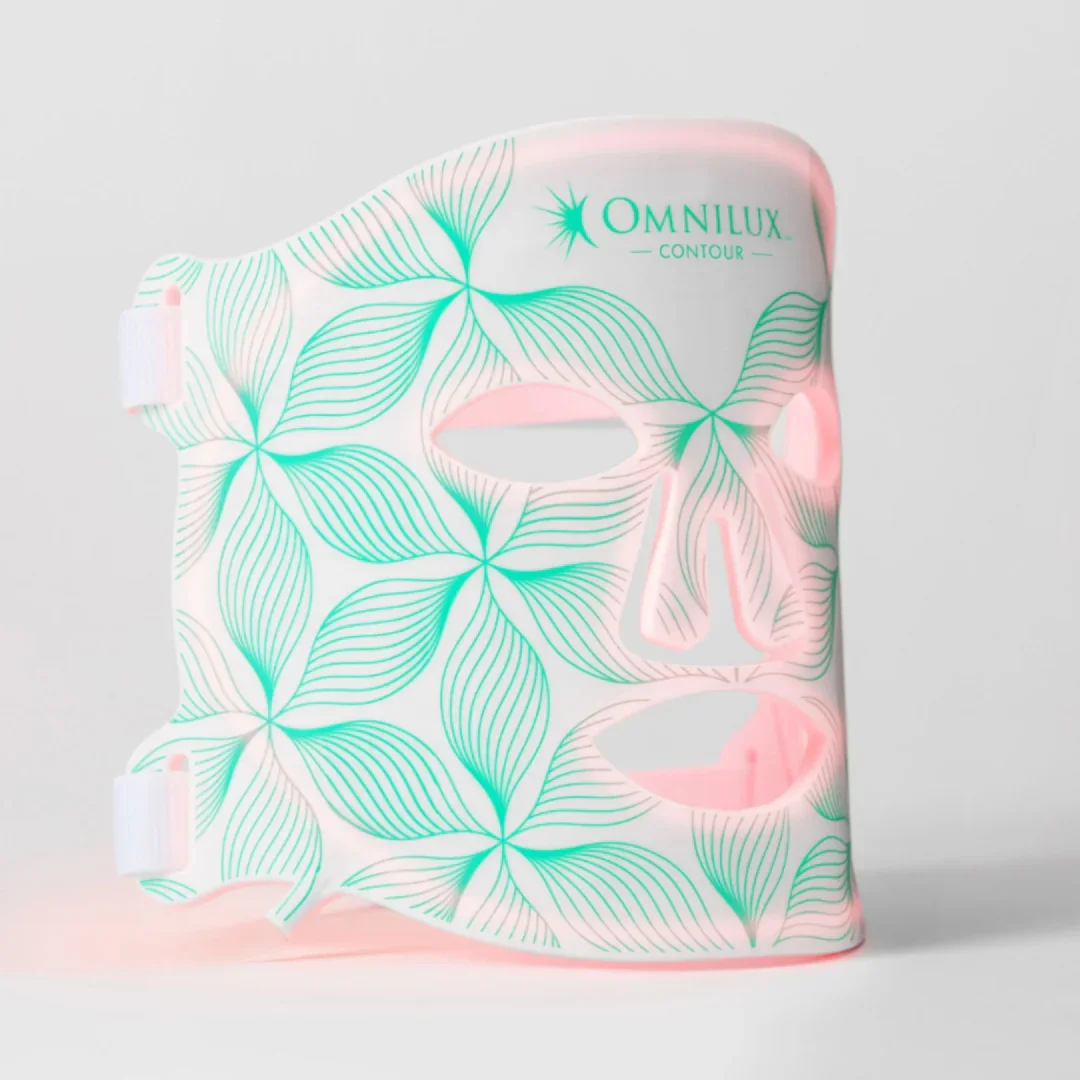
Here is why the Omnilux earns that level of trust. Their technology has been featured in more than forty independent peer-reviewed clinical studies. Most brands in this space point to general red light therapy research to back up their claims. Omnilux’s specific technology has been studied independently, repeatedly, for nearly two decades. That is a fundamentally different level of evidence.
The wavelengths are 633nm red and 830nm near-infrared. These are the combinations that appear most frequently in photobiomodulation and low-level laser therapy research, not because they are trendy but because they keep producing results. The 633nm supports cellular repair and collagen renewal at the skin surface. The 830nm goes deeper into the fibroblast layer where new collagen and elastin are built, which is why it is particularly effective for firmness and long-term anti-aging.
One technical detail worth knowing is that Omnilux uses dual chip technology, meaning both wavelengths come from the same LED bulb rather than alternating between different bulb types. In practice this means more consistent coverage. Every point on your face receives both wavelengths at the same time rather than patches of one and gaps of the other.
It is also FDA-cleared as a Class II medical device, which is a more rigorous clearance category than the FDA-registered label many brands lead with. If your skin care is guided by a board-certified dermatologist or esthetician, or you want to be able to hand your provider the box and have them nod, this is the one.
Who this is for: anyone who wants the most clinically backed at-home device available, anyone working with a dermatologist or esthetician, and anyone prioritizing anti-aging with the strongest evidence behind it.
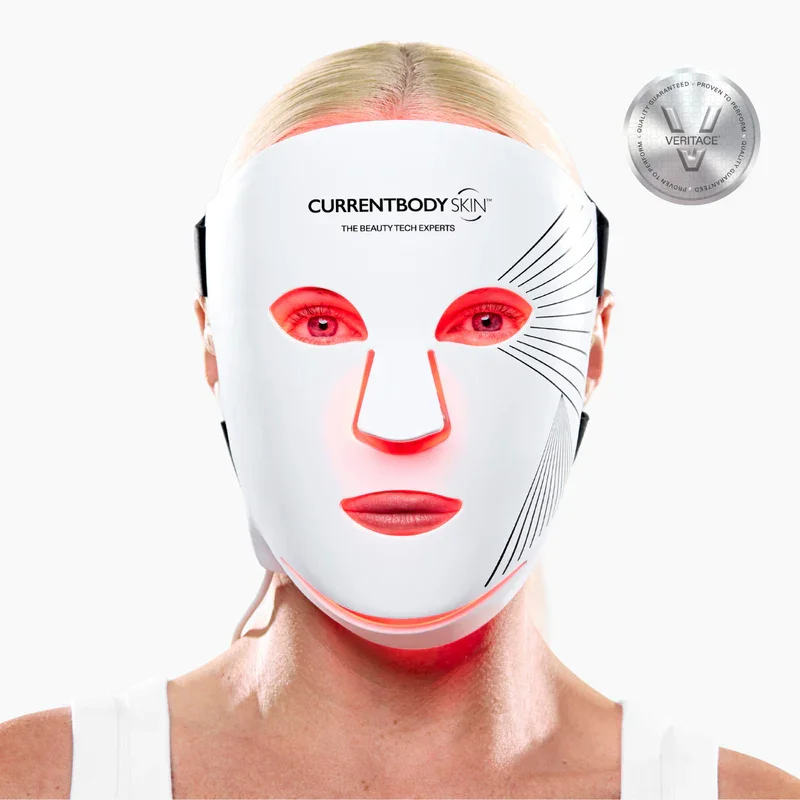
CurrentBody Skin LED Light Therapy Mask Series 2
The most rigorously quality-tested mask on this list.
I also want to be clear here. I do not personally own this one either. This is a research-backed recommendation, not a personal-use review.
Most LED mask brands test a sample from a production run and call it done. CurrentBody tests every single bulb in every single device before it leaves the facility. They call it Veritace testing and it is the most transparent quality control process I have seen from any brand in this category. When you are spending hundreds of dollars on at-home masks that only work if the light is precise, knowing your specific unit has been individually verified matters.
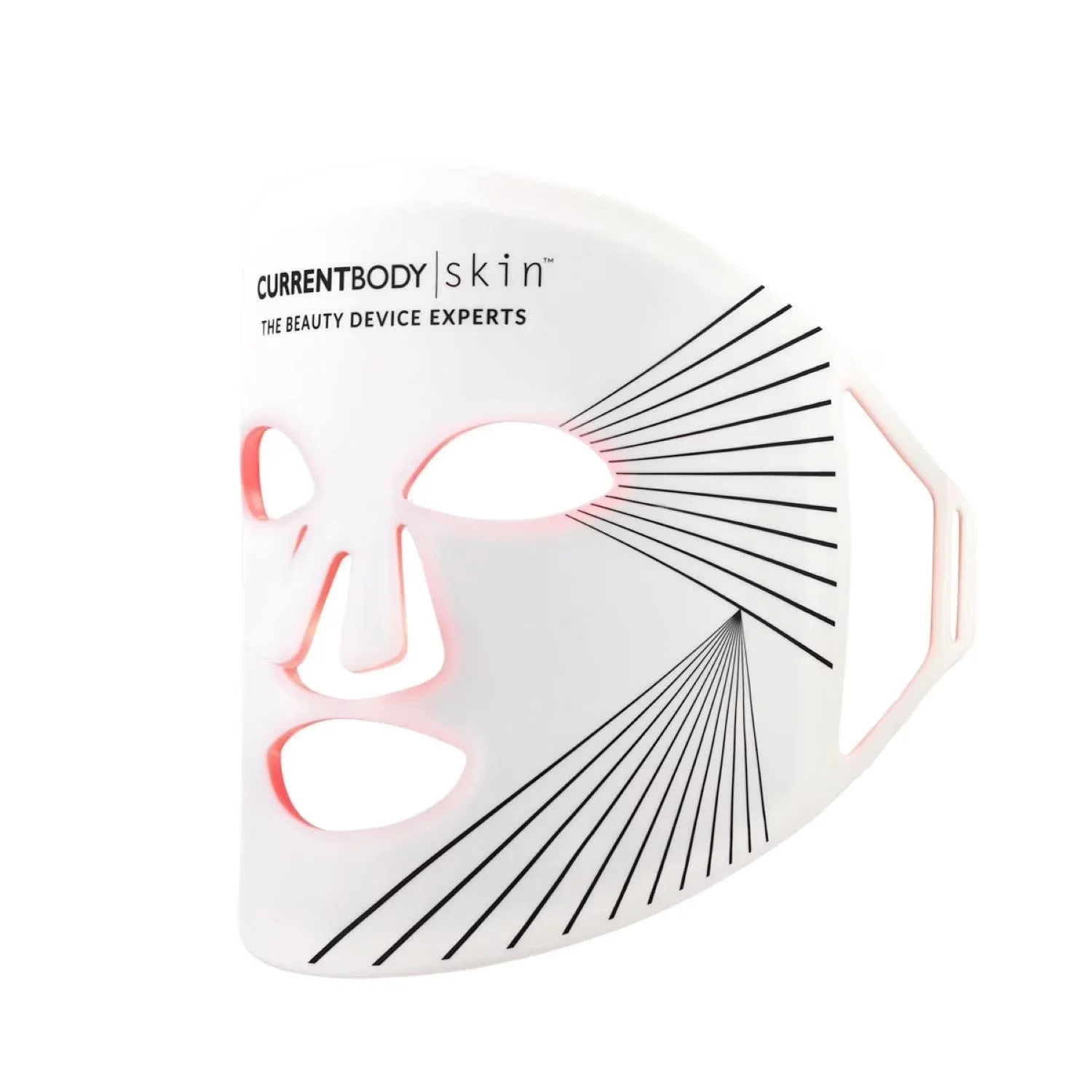
The Series 2 uses three wavelengths: 633nm red, 830nm near-infrared, and 1072nm deep near-infrared. That third wavelength is where this mask pulls ahead for more advanced anti-aging concerns. The 633nm handles surface collagen and tone. The 830nm works in the mid-layers of the dermis. The 1072nm goes deeper than either of those, reaching up to ten millimeters into the skin where it stimulates collagen production in tissue layers the other two wavelengths simply cannot access. If you are dealing with deeper lines or more pronounced loss of firmness, that extra depth is meaningful.
The mask has 236 LEDs built into flexible liquid silicone designed to conform closely to your face. This matters more than it sounds. How closely a mask sits against your skin directly affects how much light energy actually reaches you. A mask that gaps away from your face is not delivering the irradiance listed on the label.
Who this is for: anyone who wants maximum quality assurance, three-wavelength coverage, and a premium device built for serious anti-aging results.
Project E Beauty LumaLux Face Pro
The highest LED count on this entire list.
This is the upgraded Project E Beauty option.
If the BON CHARGE is where I started and the Omnilux is what the professionals recommend, the LumaLux Face Pro is what happens when an engineer gets obsessed with LED mask performance and just keeps going.
This device has 800 LEDs. The industry average is around 200. Each LED is quad-chipped, meaning four light-emitting chips inside every single bulb, and all wavelengths are distributed evenly across the entire mask. No zones that get more coverage than others. No guessing whether your forehead is getting the same treatment as your chin. Even distribution across your full face every single session.
The wavelength range runs from 460nm to 1072nm, covering blue light for acne, red and near-infrared for collagen and anti-aging, deep near-infrared for advanced-depth collagen work, green at 520nm for hyperpigmentation and dark spots, and yellow for sensitive or reactive skin. That green light deserves a specific callout because most masks do not include it. Green light targets melanin-producing cells in the upper skin layer, which is the actual mechanism behind fading dark spots and sun damage. If hyperpigmentation and residual pigmentation from acne are your main concerns, this is the only mask on this list that directly addresses that mechanism.
Sessions are three to six minutes depending on the mode, compared to ten minutes for most other masks. If your routine is already packed and ten minutes sometimes gets skipped, cutting it to three makes regular use of red light therapy genuinely easier.
Who this is for: anyone who wants one device that covers every skin issue, anyone dealing with hyperpigmentation or dark spots specifically, and anyone who wants clinical-level LED coverage without going to a doctor’s office for in-office treatment.
Use code: Jazz = 15% off
Quick Comparison at a Glance
If you just want the short version, here is how I would break these down.
BON CHARGE
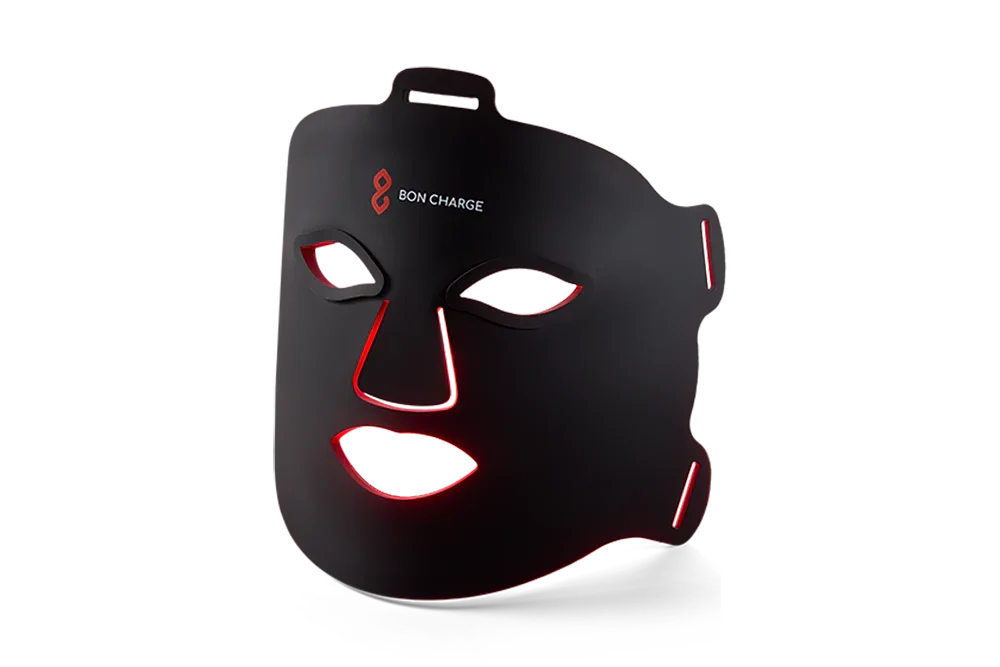
630nm + 850nm
240 LEDs
10-minute sessions
Best for beginners, texture, redness, and red spots
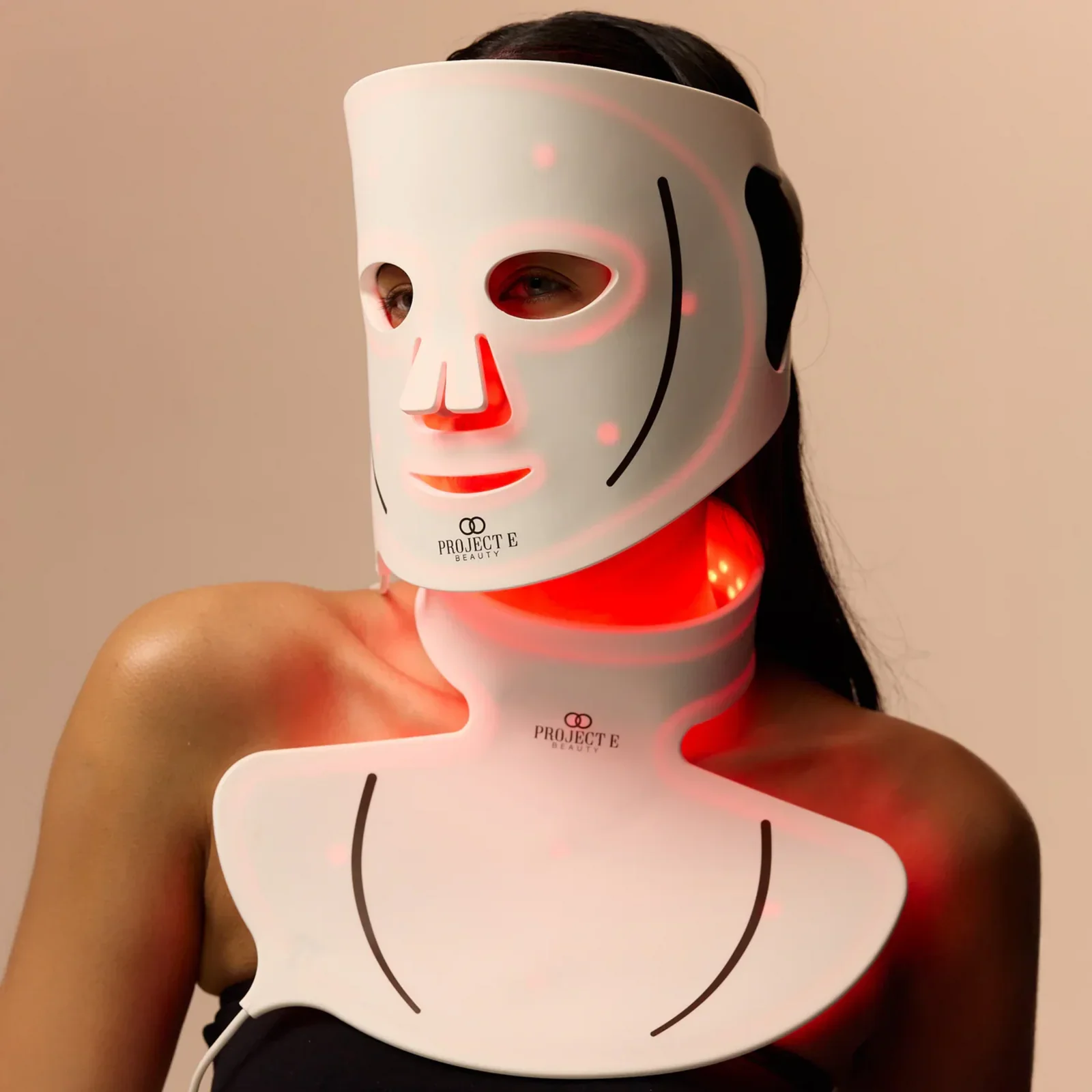
630nm + 850nm + multi-color
150 LEDs
3 to 6-minute sessions
Best for acne + anti-aging + neck coverage
Use code Jazz for 15% off
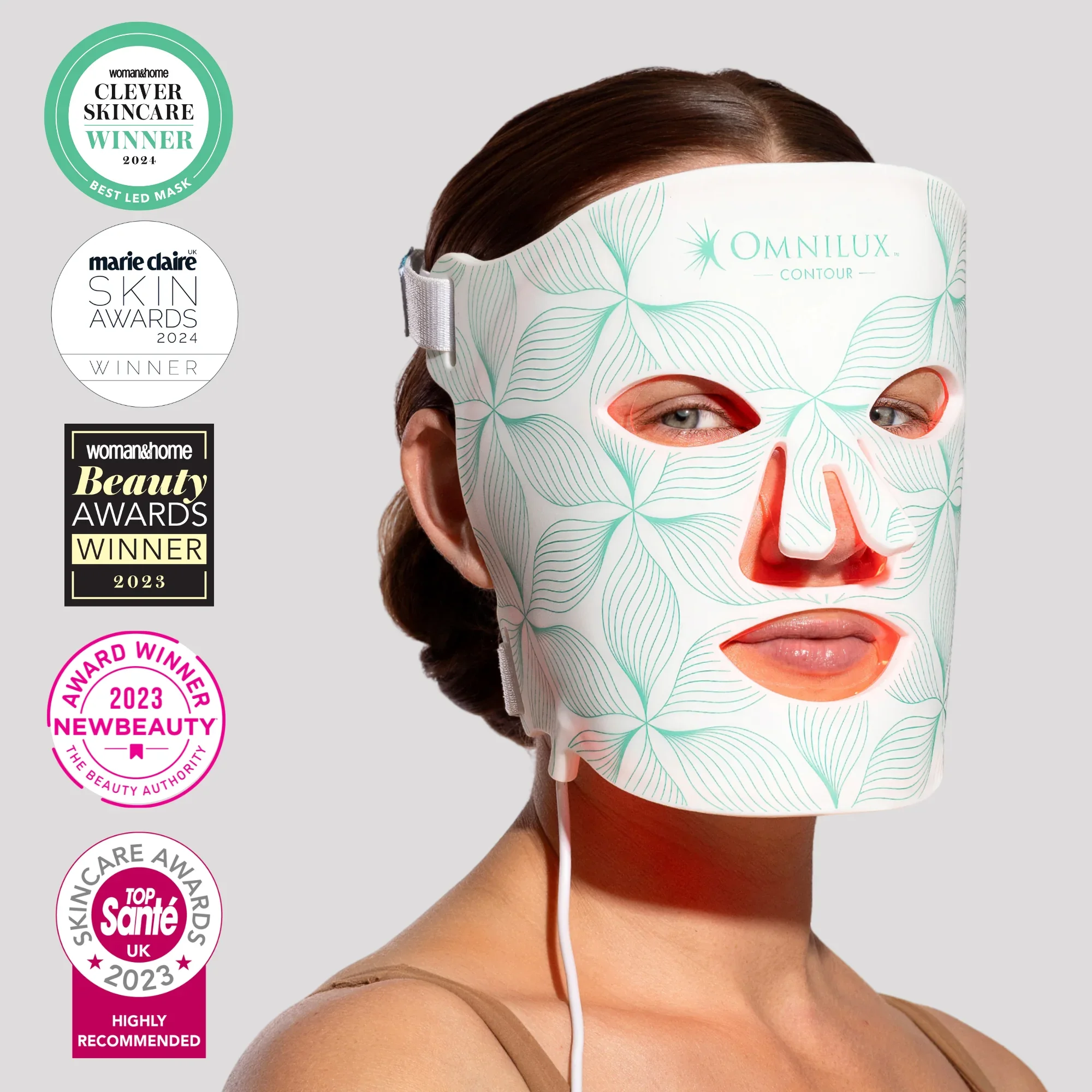
633nm + 830nm
132 LEDs
10-minute sessions
Best for the most clinical backing,
FDA Class II clearance, and
esthetician-backed trust
633nm + 830nm + 1072nm
236 LEDs
10-minute sessions
Best for top-tier quality testing and
deeper wavelength coverage
630nm + 850nm + 1072nm + multi-color
800 LEDs
3 to 6-minute sessions
Best for full spectrum coverage, hyperpigmentation,
dark spots, and people who want the most advanced option
Use code Jazz for 15% off
A Note on My Acne-Safe Skincare Routine
One of the biggest shifts I made alongside starting red light therapy was ditching anything that could be clogging my pores or disrupting my skin. I mean everything. I went through my whole routine and removed any ingredient that was known to be comedogenic. No more harsh actives. No more tretinoin. No more products that were aggressively targeting my acne while quietly making everything worse.
My skin changed when I stopped fighting it and started supporting it. Red light therapy is part of that. But the products I use on my skin matter just as much, and I want to make sure what goes on before and after my mask session is not working against everything the light is doing.
I have a full breakdown of my current acne-safe skincare routine on my ShopMy page, with every product I trust and use consistently. These are not paid partnerships with brands that sent me something to try. These are things I found, tested, and kept using because they actually work for my skin.
You can shop my acne-safe routine here!
And if you want the collection with all of my recommended masks in one place, shop all of my picks here.
Is It Safe? And What Should You Know Before You Start?
Red light therapy has one of the cleanest safety profiles in skin care. Most people experience nothing beyond mild warmth during a session or occasional mild redness immediately after that resolves quickly. There is no UV light exposure, no heat damage, no downtime, and the most common side effects of red light therapy tend to be short term and mild when the device is used correctly.
A few things to be aware of. Eye protection matters. The masks on this list all have built-in eye coverage, but if you are using panels, handheld devices, or treating small areas outside the face, wear eye protection. These are bright lights and protecting your eyes is just basic common sense.
If you are on photosensitizing medications, certain antibiotics, or have medical conditions involving light sensitivity, check with your healthcare provider before starting. The same goes if you have a complicated skin history, are under active care for skin cancer concerns, or are doing photodynamic therapy or any other professional treatment through a doctor’s office.
And if the mask is not sitting flush against your skin, you are not getting the irradiance on the label, so fit actually matters.
The most important thing to know is this is not a one-and-done treatment. The clinical research that produced real results used consistent sessions over months, not weeks. Expect subtle improvements in texture and tone around weeks four to six. More meaningful changes often show up at the three-month mark. The people who get the best results are the ones who treat it like a habit rather than a quick fix.
The Bottom Line
Six months ago I was spending money on facials every few weeks just to get LED light therapy done in a chair, and the results never lasted. Now I do it on my own terms, in my own home, for a one-time investment that has paid for itself many times over. My skin texture is different. My pigmentation has faded significantly. My red spots are calmer. I am not blowing through product. I am not battling a destroyed skin barrier. I have a routine that actually works for my skin and my life as a busy mom.
That is really what this whole post is about. Not the technology, even though the technology is genuinely interesting. It is about finding something that works, being consistent with it, and not having to choose between taking care of yourself and having enough time left to take care of everything else.
If you have questions about any of the masks above or want to know what I would recommend based on your specific skin concerns, drop them in the comments. I will answer every one.
And if you want to shop all of my recommended masks in one place, you can do that below:
FAQs
-
Most at-home masks are designed for regular use of red light therapy several times a week, and many can be used daily depending on the brand’s instructions. Personally, I use mine five to six nights a week because consistency is what gave me the best results.
-
You may start seeing subtle improvements in overall skin texture, tone, and redness around weeks four to six with consistent at-home use. More noticeable changes in pigmentation, breakouts, and signs of aging usually take a few months.
-
In many cases, yes. A lot of at-home devices are made for daily or near-daily use as long as you follow the recommended session time. More is not always better, though, so stick to the protocol for your specific mask.
-
In general, yes. It can be a really good option for acne-prone or reactive skin because it supports healing and calms inflammation without the irritation that some topical treatments can cause. Masks that also include blue light therapy can be especially helpful when active breakouts are part of the picture.
-
I keep it simple and go straight in with moisturizer on clean skin. I want my skin barrier supported, not overloaded, especially after a session. Gentle, acne-safe skin care works best for me.
-
It can help with post-acne marks, redness, and uneven tone over time by supporting tissue repair, reducing inflammation, and improving blood flow. In my experience, it helped fade lingering pigmentation and red spots, but like everything in skin care, results vary from person to person.









Customizable recipes built off of pantry staples – and everything only takes 30 minutes or less!